


 Français CA


Discover how Metrolex smart scales use advanced BIA technology to accurately analyze body composition — including...
Latest posts
-
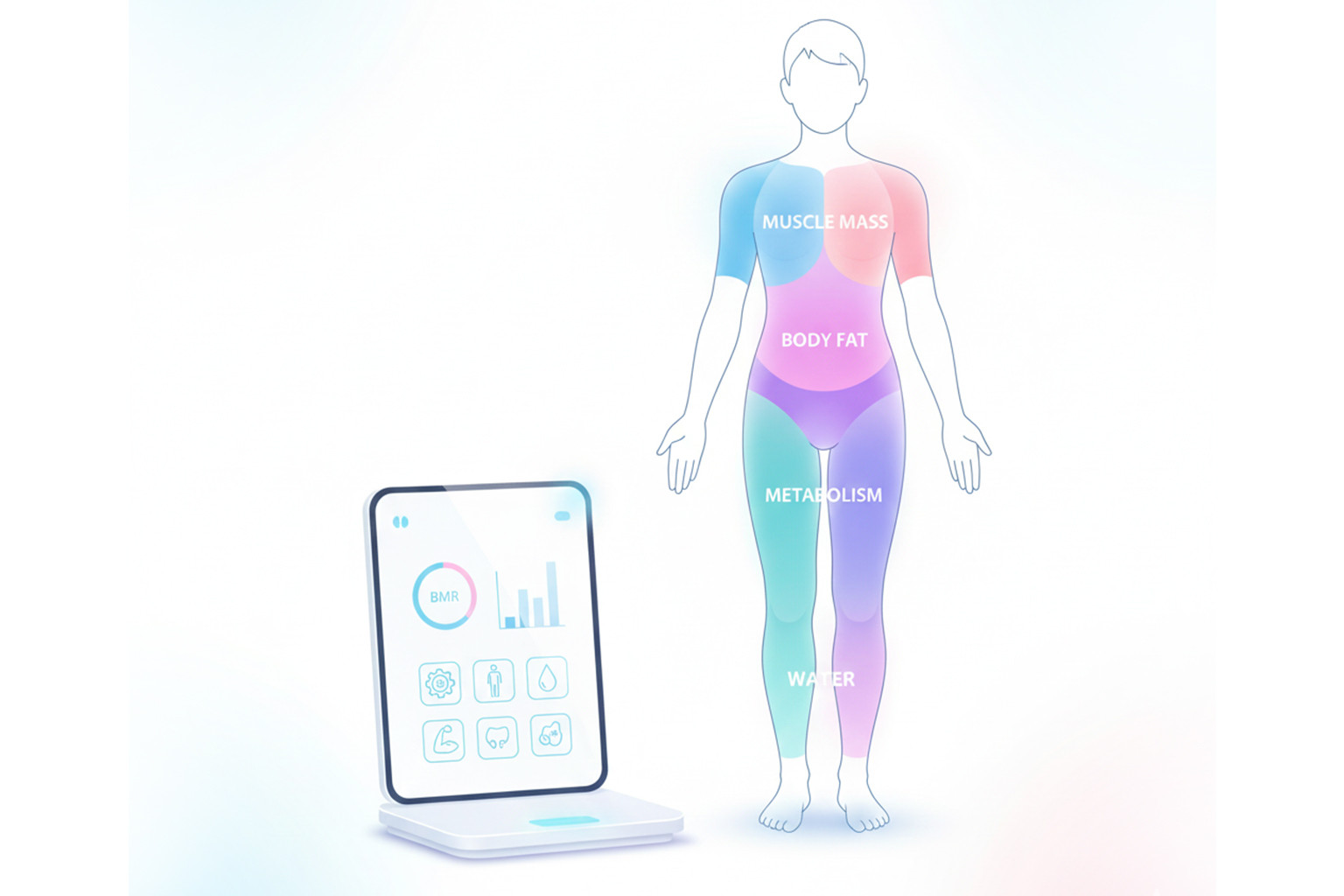 BIA Technology: Understanding the Science Behind Metrolex ScalesRead more
 -
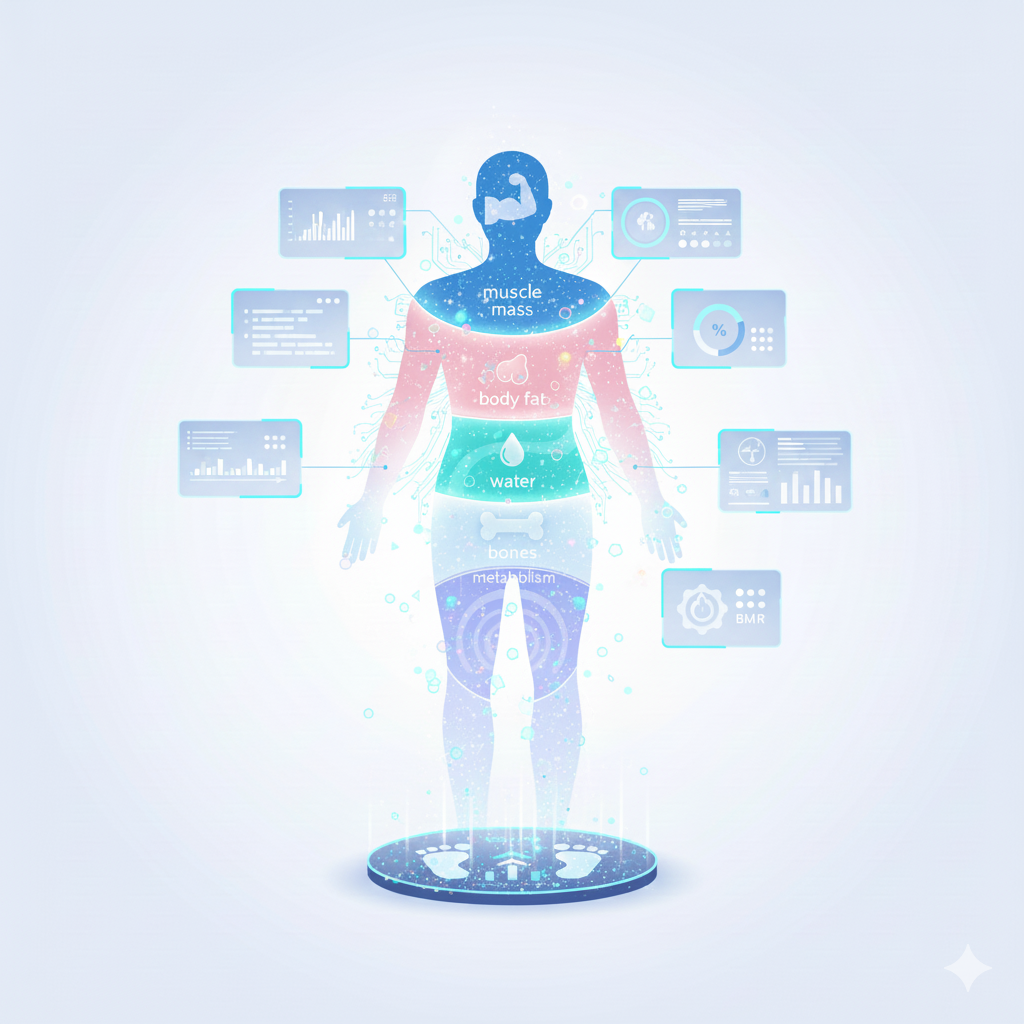 Understanding Your Body Composition: Is It Really Essential?Read more
METROLEX MX-F500 — Une balance professionnelle d'analyse corporelle destinée aux cliniques, nutritionnistes et salles...
-
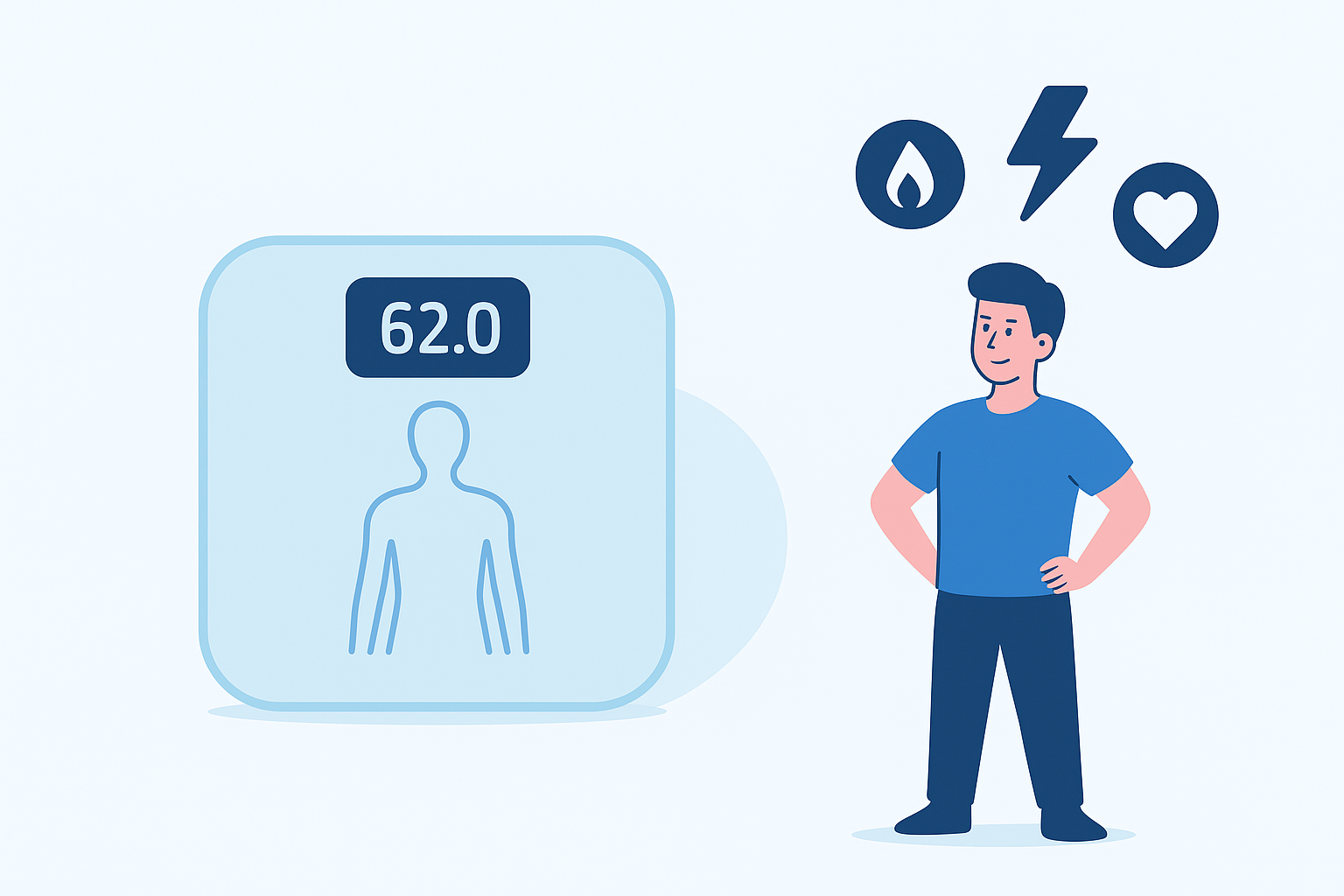 Understanding Your Basal Metabolic Rate (BMR) in Quebec: An Essential IndicatorRead more
The Basal Metabolic Rate (BMR) represents the minimum energy your body needs to function at rest. In Quebec, where...
-
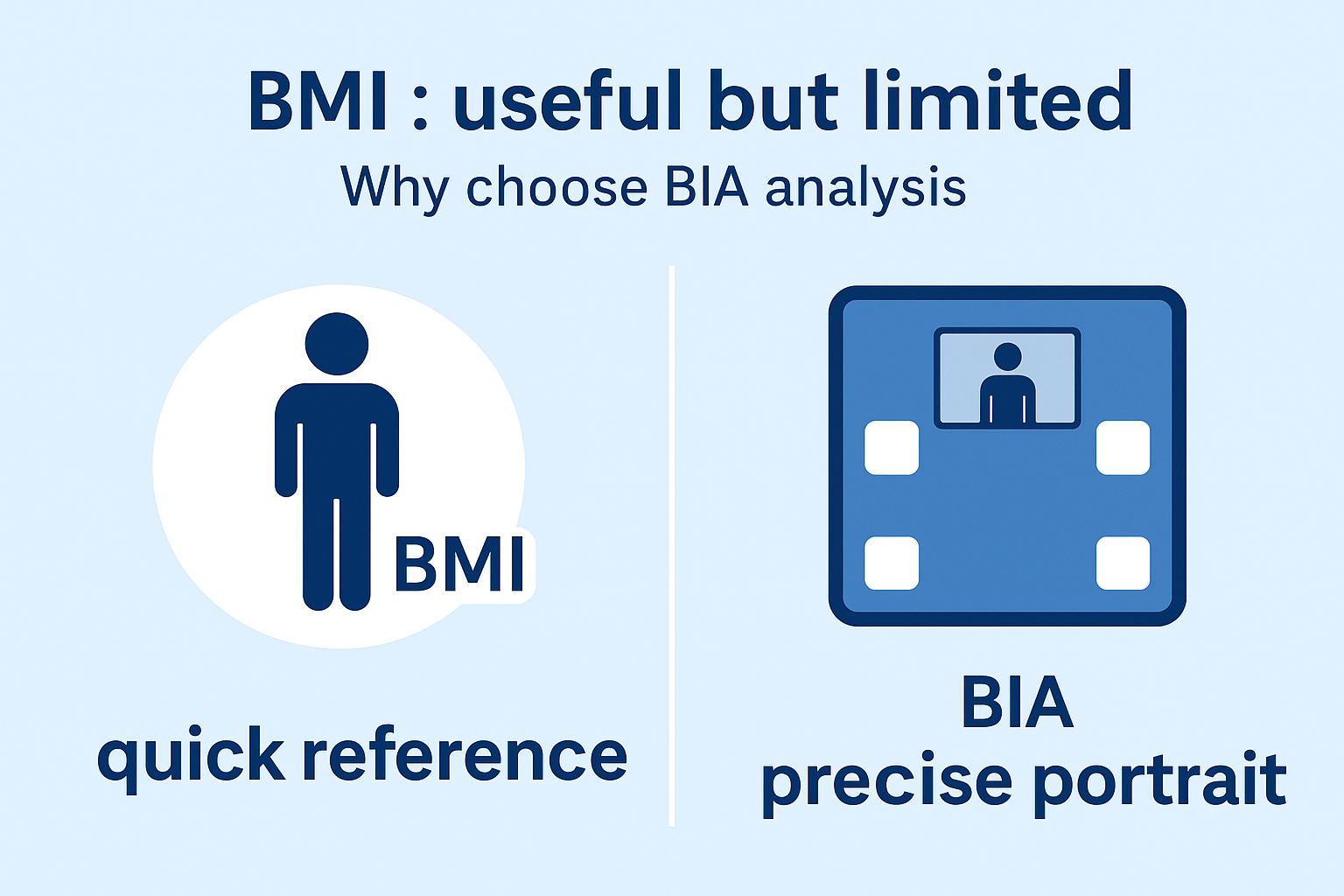 Understanding Your BMI in Quebec: a useful benchmark… but not enoughRead more
BMI is a useful but limited indicator. Metrolex highlights its limitations and shows how body composition analysis...
-
 BIA Technology: Understanding the Science Behind Metrolex ScalesRead more
Discover the BIA technology behind the Metrolex CF-577 and MX-F500 scales: precise body composition analysis through...
Blog categories
Search in blog
Archived posts
BIA Technology: Understanding the Science Behind Metrolex Scales
BIA Technology: Understanding the Science Behind Metrolex Scales
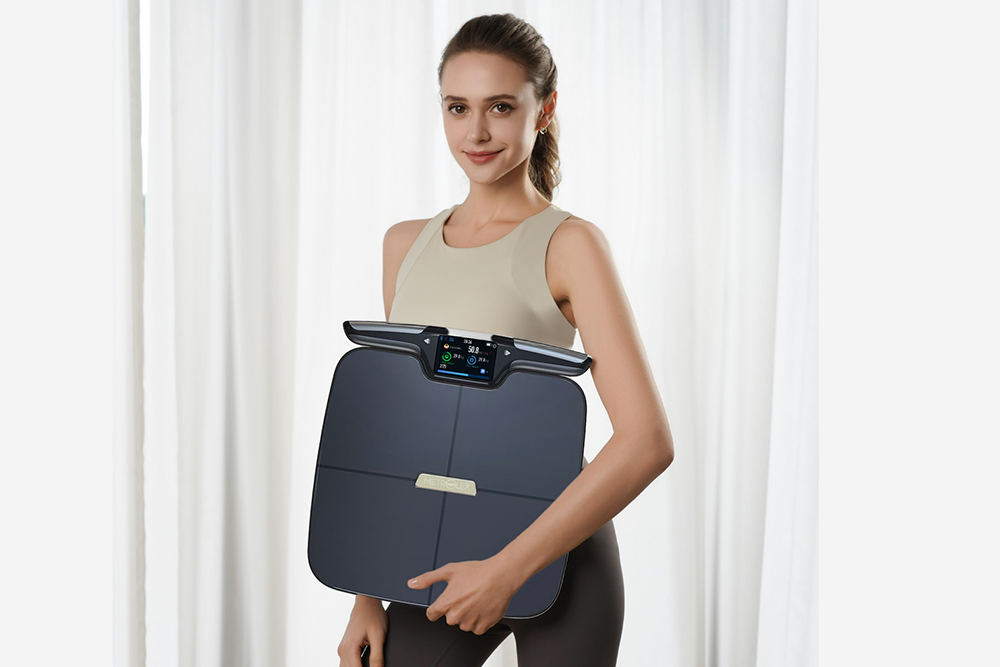
Today’s smart scales do more than just display weight. Thanks to BIA (Bioelectrical Impedance Analysis) technology, they provide a comprehensive body composition analysis: muscle mass, fat, water, bones, and more. The Metrolex models used in Canada — CF-577 (dual-frequency) and MX-F500 (quadruple-frequency) — take this precision even further.
A Brief History
BIA technology emerged in the 1960s when researchers discovered that the body's electrical conductivity could be used to estimate body composition. Long reserved for medical and sports settings, it was expensive and required a specialized operator.
It wasn’t until the early 1990s that the first home scales appeared on the market. Since then, technological advances and improved algorithms have made these devices more accurate, faster, and accessible to the general public — like the Metrolex scales many Canadians use today.
How Does BIA Technology Work?
BIA measures the body's resistance to a very low electrical current (harmless and imperceptible). Each tissue conducts differently:
- Muscles, rich in water, allow current to pass easily.
- Fat and bones offer more resistance.
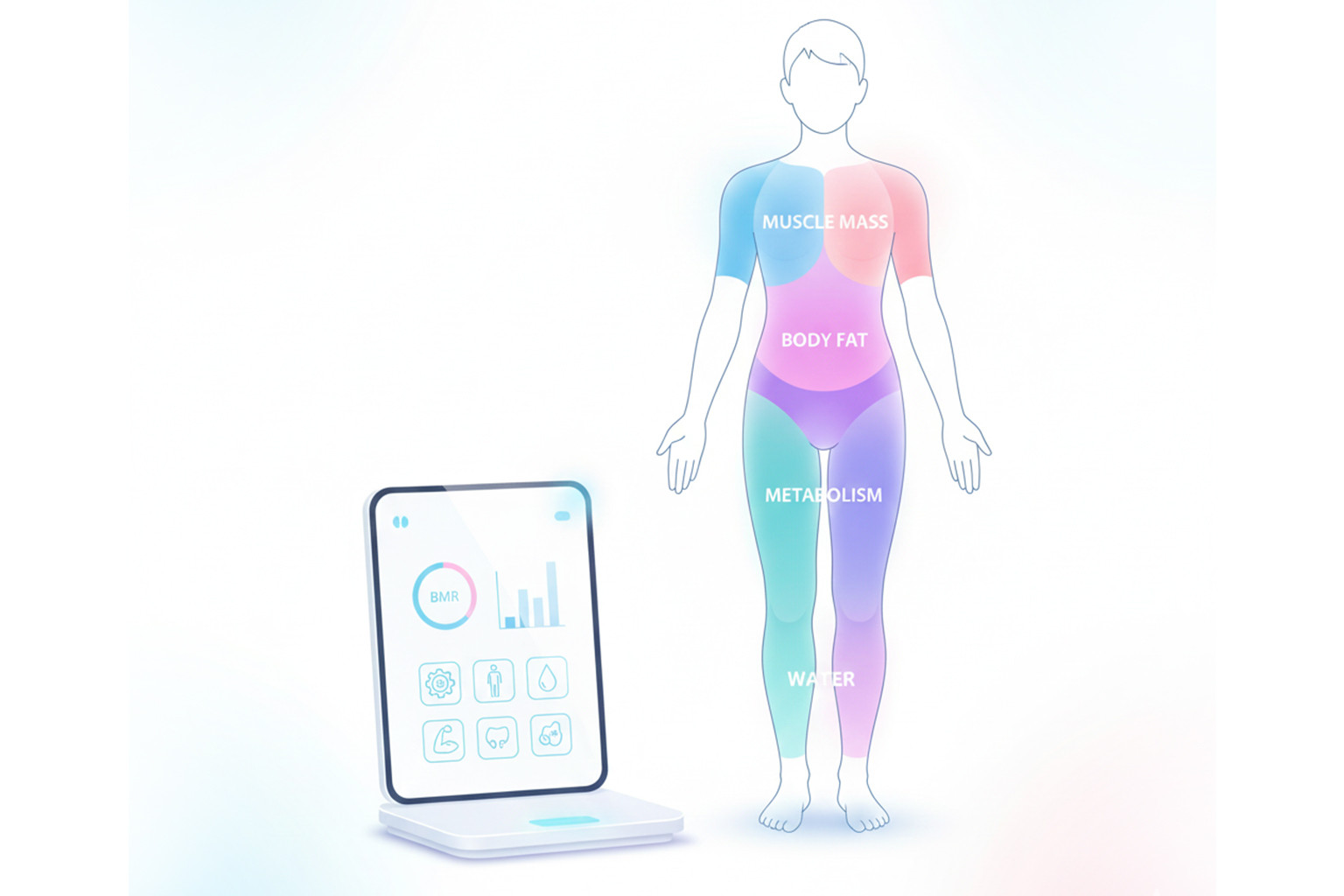
Based on these data, Metrolex scales calculate several essential indicators, including:
- Body fat
- Muscle mass
- Body water percentage
- Basal metabolism
- Visceral fat
CF-577: Dual-Frequency Precision
The Metrolex CF-577 uses two frequencies (5 kHz and 250 kHz), providing more reliable readings of superficial and deep body layers.
✓ Advantages of dual-frequency:
- Higher accuracy compared to standard single-frequency scales.
- Stable and consistent results over time.
- Ideal for trainers, nutritionists, kinesiologists, or serious personal tracking.
This technology approaches a margin of error of ±3% compared to DEXA, the medical reference for body imaging.
MX-F500: Professional Four-Frequency Analysis
The Metrolex MX-F500 goes further with DSM-BIA technology using four frequencies: 5 kHz, 50 kHz, 250 kHz, and 500 kHz.
Why Four Frequencies Matter:
- Ultra-detailed multi-layer analysis: better distinction between deep tissues, visceral fat, and muscle mass.
- Advanced segmental measurement: arms, legs, and torso analyzed separately for a complete clinical profile.
- More reliable results despite hydration, temperature, or posture variations.
- Automated professional reports: PDF sent by email or direct printing, ideal for clinics and sports centers.
Scientific Reliability
Multi-frequency BIA technology is validated by rigorous clinical studies. Metrolex devices show over 97% correlation with DEXA systems.
For optimal results:
- Weigh yourself in the morning on an empty stomach.
- Avoid exercise before measurement.
- Be barefoot and remain still.
An Essential Tool for Health and Performance
Multi-frequency BIA has become indispensable for:
- nutritional tracking,
- sports evaluation,
- detecting water imbalances,
- monitoring muscle mass or visceral fat.
Metrolex models combine accuracy, connectivity (Wi-Fi/Bluetooth), and an intuitive interface, making data easy to analyze even for beginners.
The Future of BIA Technology
The next generations of Metrolex scales will integrate more artificial intelligence and cloud analytics. They will enable:
- Highly personalized health reports;
- Early detection of metabolic risks;
- Recommendations tailored to each body profile.
Conclusion
Multi-frequency BIA technology today represents the best in non-invasive body analysis. Whether:
- CF-577 for personal or fitness tracking;
- MX-F500 for professional clinical analysis;
Metrolex provides reliable, validated tools designed to reveal what is invisible to the naked eye: your internal health.
Posted in:
Default category
Related posts
-
BIA Technology: Understanding the Science Behind Metrolex Scales
Discover the BIA technology behind the Metrolex CF-577 and MX-F500 scales: precise body composition analysis through...Read more
-
Understanding Your BMI in Quebec: a useful benchmark… but not enough
BMI is a useful but limited indicator. Metrolex highlights its limitations and shows how body composition analysis...Read more
-
Understanding Your Basal Metabolic Rate (BMR) in Quebec: An Essential Indicator
The Basal Metabolic Rate (BMR) represents the minimum energy your body needs to function at rest. In Quebec, where...Read more
-
Understanding Your Body Composition: Is It Really Essential?
METROLEX MX-F500 — Une balance professionnelle d'analyse corporelle destinée aux cliniques, nutritionnistes et salles...Read more
Leave a comment